Frame & Form
Filmmaking & Storytelling
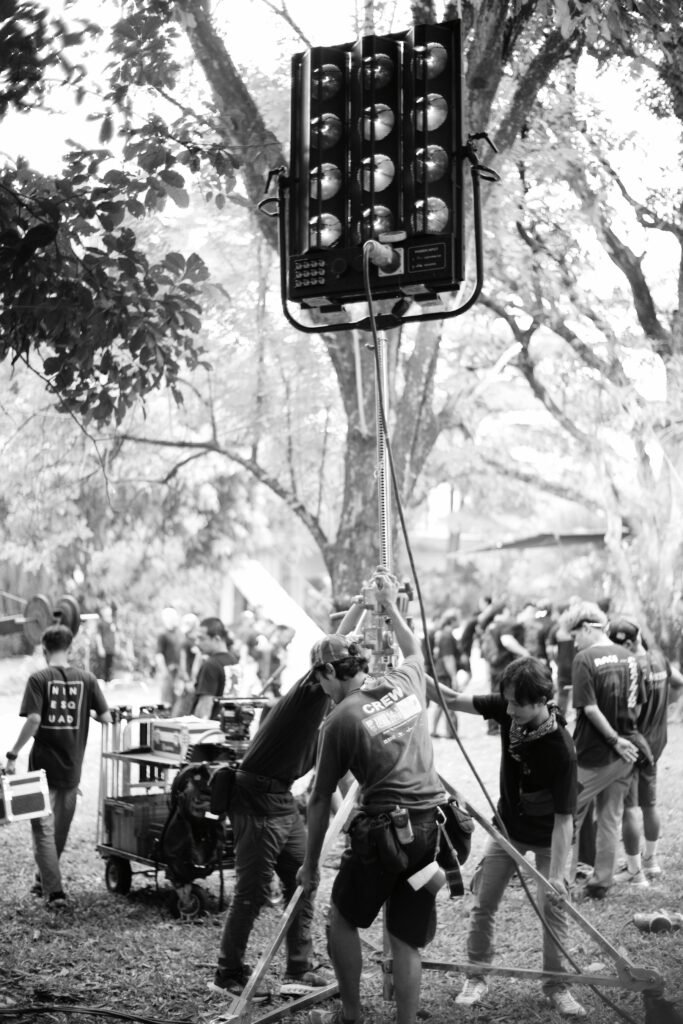
Great filmmaking starts with a clear audience experience. These principles apply to live-action performance, animation and machinima.
Character intention
Give each scene a clear objective, obstacle and change. An action becomes readable when it is motivated. For actors, that means playable choices and active listening. For animators, it means posing and timing that communicate the same intention.
Blocking and continuity
Decide where characters move, where attention shifts and how one beat leads into the next. Track eyelines, screen direction, props and movement so cuts feel coherent.
Camera composition
Use shot size and angle to control distance, emphasis and power. Keep the frame readable and avoid camera movement unless it helps the story. Establish geography before cutting to details.
Lighting and mood
Lighting shapes separation, depth and atmosphere. Protect important facial or character detail, keep contrast intentional and test how the scene reads at final output size.
Review checklist
- Can a viewer understand the scene objective?
- Is the important action visible?
- Do timing and cuts support the emotional beat?
- Are sound, framing and continuity checked?
- Does every detail support the story?
Put the principles to work
A short scene-planning routine
- Define the change. Write what the character wants at the start and what is different by the end.
- Choose the visual priority. Decide what the audience must notice in each beat.
- Plan blocking and eyelines. Track movement, screen direction, reactions and continuity.
- Test the hardest moment. Rehearse or render a short section before committing to the full scene.
- Review without guessing. Ask a viewer what they understood, then compare that response with your intention.
Actors can apply these questions during scene study; SFM creators can use them when planning poses, camera angles and animation timing. Continue with the acting hub, the SFM studio or the shot-list planner.